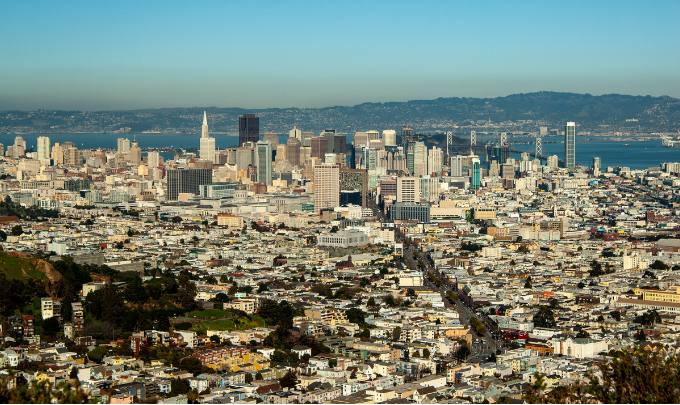
The TOGETHER Bay Area region covers a 10-county stretch of Northern California, including the 9 counties of the San Francisco Bay Area plus Santa Cruz County. From Cloverdale to Watsonville, Brentwood to Pacifica, our region spans nearly 5 million acres of land, including rare, diverse, and irreplaceable landscapes and diverse human communities found nowhere else in the world.
A Biodiversity Hotspot with Global Significance
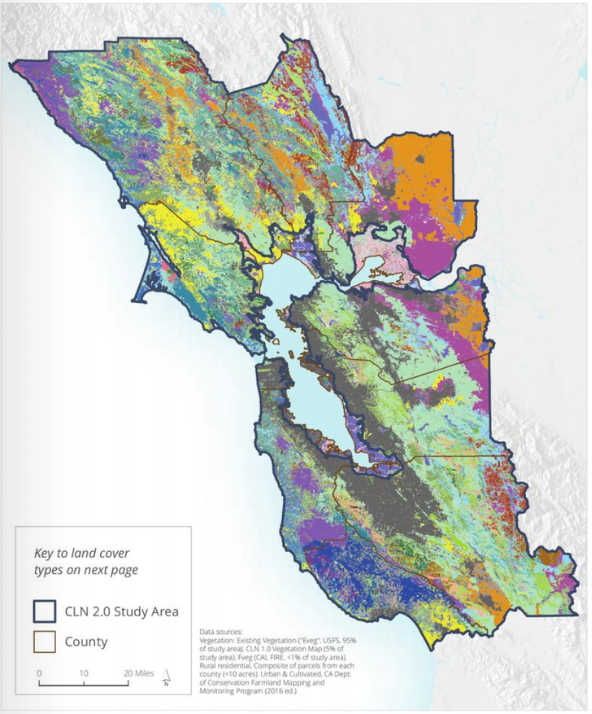
Vegetation types in the Bay Area (CLN 2.0)
The San Francisco Bay Area is one of 36 globally recognized biodiversity hotspots. A hotspot holds at least 1,500 plant species found nowhere else in the world and has already lost 70% of its original natural vegetation.
Biodiversity hotspots are also where nature and people intersect most directly. Hotspots cover just 2.5% of Earth’s land surface, yet their forests, wetlands, and other ecosystems supply an estimated 35% of the ecosystem services that we rely on, like clean water, crop pollination, and flood control. Beyond basic needs, ecosystem diversity also provides essential places of belonging, cultural practice, recreation, and connection with nature.
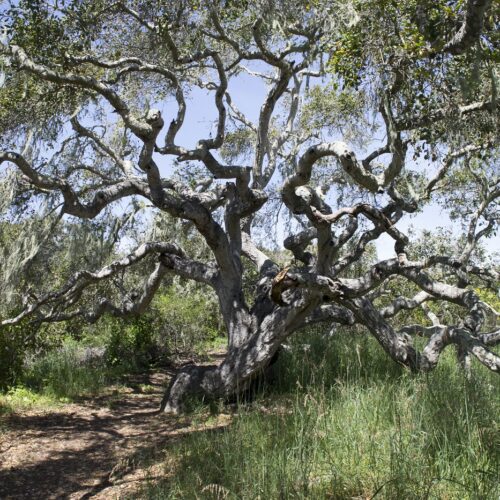
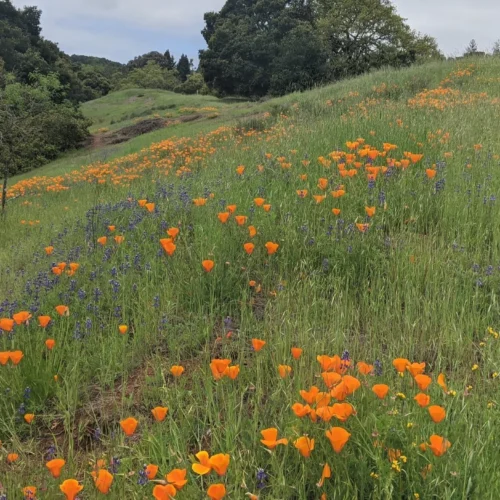
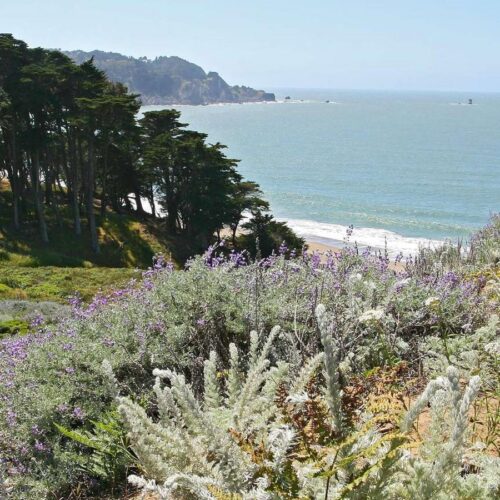
There are over 10 different ecosystem types in the Bay Area that are home to a wide variety of plant, animal, and fungi species. This includes oak woodlands, sand dunes, grasslands, coast redwood forests, coastal shrublands, wetlands, riparian zones, estuaries, and more!
The Golden Gate Biosphere Network
In 1988, UNESCO’s Man and Biosphere Program established the Golden Gate Biosphere Network (GGBN), cementing the Bay Area as an ecologically and culturally significant region where people, nature, and governance come together to support thriving ecosystems and communities.
The GGBN is one of 28 biosphere regions in the US Biosphere Network and spans 28,000 square miles, 5 counties, and 6 national and state parks. The biosphere extends 200 miles out into the ocean and is the only biosphere in the network where land, sea, and city meet. GGBN’s 20 partner groups include federal, state, local, and non-profit organizations.
In 2024, the network published a Climate Change Vulnerability Assessment, bolstering the region’s capacity to build climate resilience and sustain our communities.
Many Habitats, One Bay
From misty redwood groves and sunlit oak woodlands to quiet marshes and rolling grasslands, every ecosystem in the Bay Area has its own story and community of life. For generations, people have woven these places into their lives, gathering, fishing, hiking, gardening, celebrating, and building enduring relationships with the land. Check out some examples below:
Oak Woodlands
Grasslands
Sand Dunes
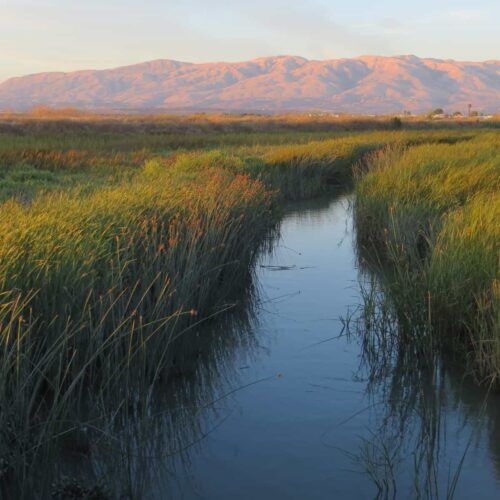
Wetlands
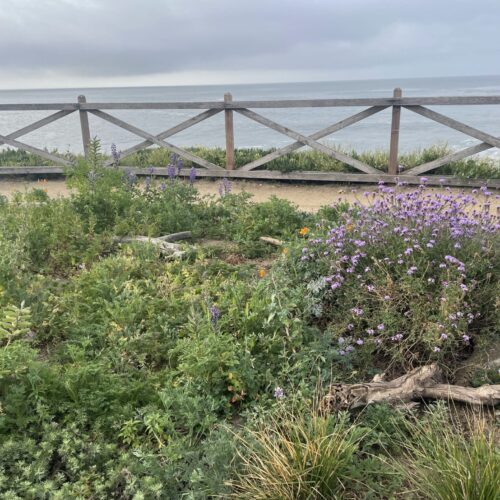
Coastal Shrub
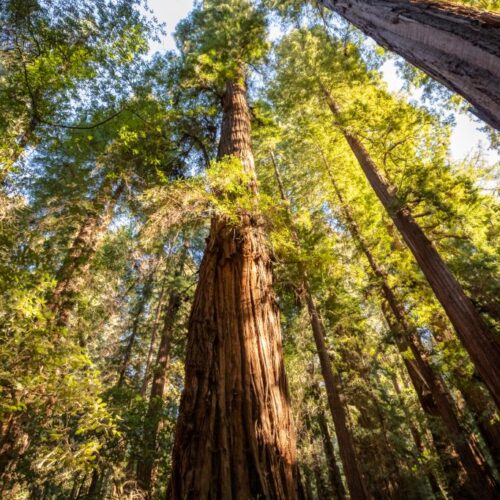
Redwood Forests
People and Place
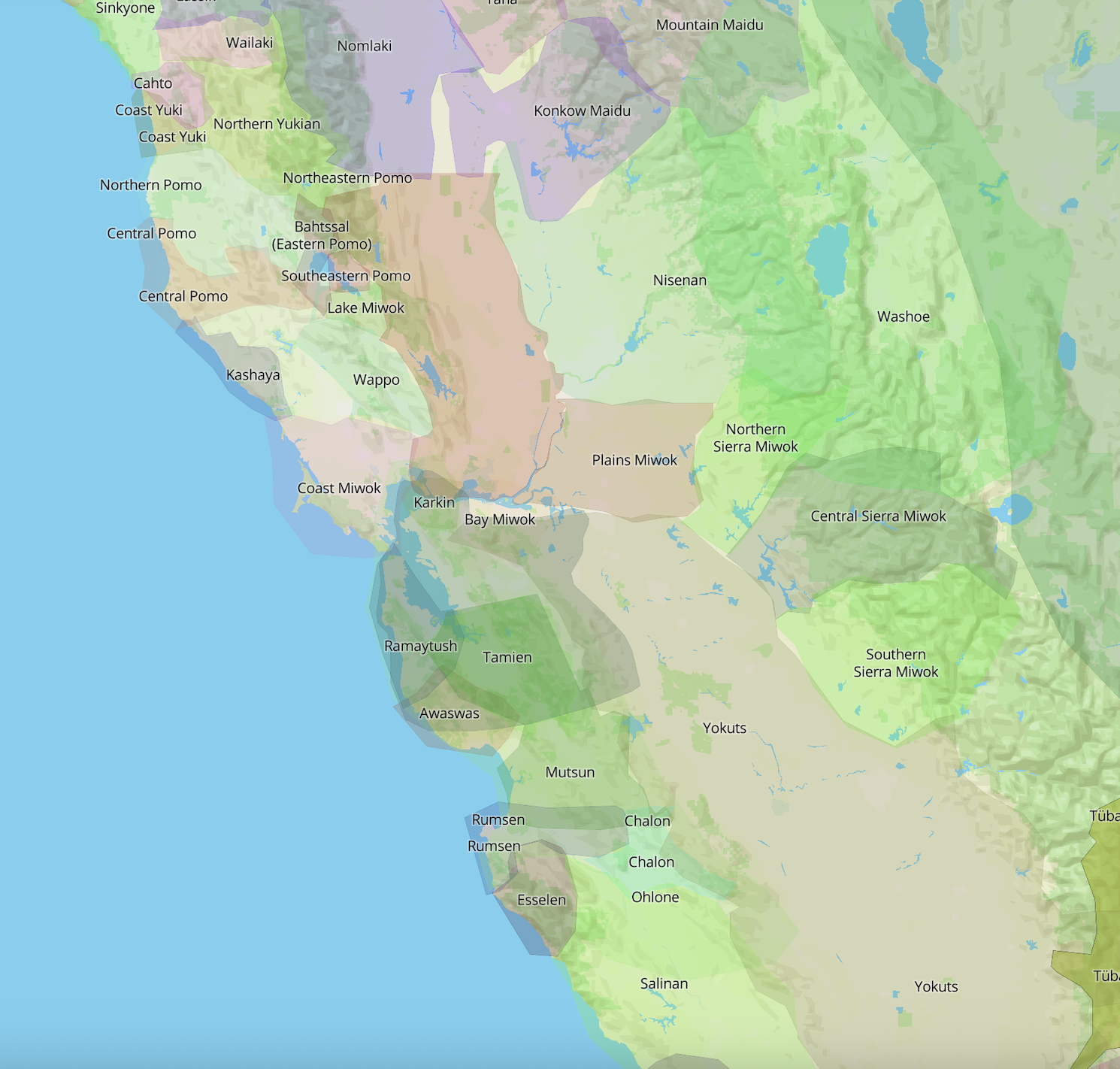
The diversity of species and ecosystems in our region reflects the diversity of people living on the land. Since time immemorial, Tribal communities have been taking care of their ancestral homes, conducting cultural burns, harvesting native plants, and using Traditional Ecological Knowledge to inform best practices for stewardship and management for future generations.
For generations, the Bay Area has also been home to human communities from over 100 countries, creating a hub of cultural exchange and creativity. Together, these communities bring a wealth of languages, foods, and traditions, shaping the region into what it is today.
The Bay Area’s unique position as a critical confluence between land, people, and sea underscores the necessity to care for the land, its inhabitants, and each other.
Tribal Territories in the Bay Area. Map data provided by Native Land Digital
Nature in the City
Cities across the Bay Area are also vital refuges for wildlife where people and nature coexist. Parks, schoolyards, and even small patches of native plants can be home to many different plants and animals, while helping cool our streets, clean our air, and manage stormwater. From coyotes and squirrels to hummingbirds, monarch butterflies, and turtles, many species call urban centers home. Their presence can also tell us a lot about the health of the surrounding ecosystem and inform ways to increase connectivity between urban nature and surrounding open spaces.
Urban nature also offers places to play, gather, and slow down amidst the bustle of city life. In a region where people and nature are deeply intertwined, it’s critical to ensure that all communities, especially historically disadvantaged populations, have access to the benefits of nature and are active participants in caring for the land and shaping urban conservation strategies.
Caring for a biodiversity hotspot, a region where people and nature are inextricably connected, means addressing the interconnected climate and biodiversity crises, while working towards creating an equitable society where we live in right relations with the lands that sustain us now and will sustain future generations.